
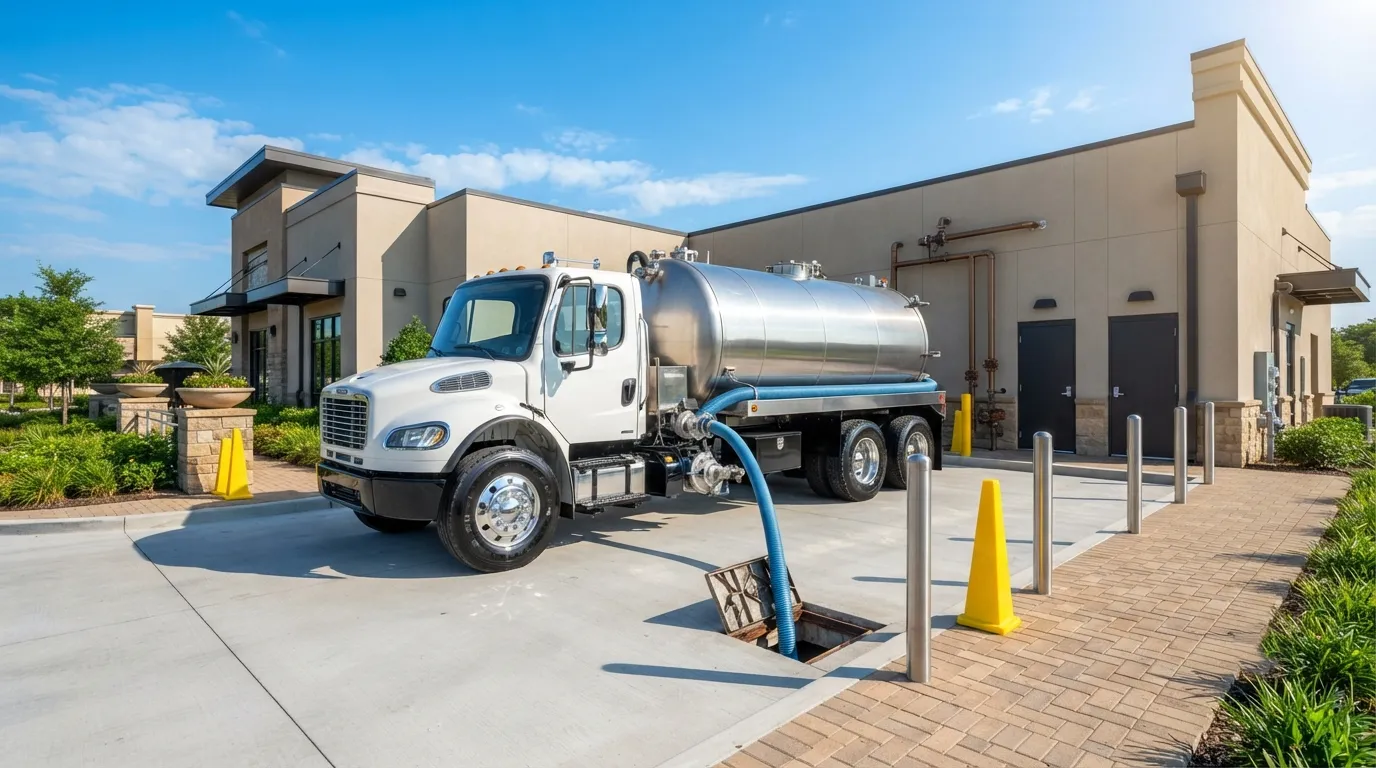
How do I know when my grease trap needs pumping?
Pull the lid and check depth with a stick or a pole, same as checking oil. Once fats, oils, grease and solids reach that 25 percent mark in the liquid layer, the trap stops working the way it should and grease starts moving downstream into your line. That is the trigger point, not a date on a calendar. A busy Kissimmee restaurant kitchen can hit that line fast during a holiday rush; a slower cafe might take twice as long. If you are not sure how to check, our crews will check it for you on the first visit and set a realistic interval from there, the same way we walk a client through a holding tank rental or a standard septic pumping service setup. This is different math than a septic tank pumping cost question, since a residential tank runs on a household-size cycle instead of a grease-volume trigger, and how often to pump a septic tank covers that side separately; if you spot trouble before pumping day, septic tank warning signs is worth a look too.
What does grease trap pumping cost in Kissimmee?
Pricing depends on trap size, access, and whether it is a standing service contract or a one-time call. Below is the general band for comparable pumping work, which gives you a starting point before a site visit confirms the number, similar to how we quote a porta potty rental cost or a dumpster rental cost before delivery.
| service | duration | typical range |
|---|---|---|
| septic/grease pumping | single visit | $150 to $300 |
| septic/grease pumping | weekend call | $50 to $150 |
Restaurants near Hunters Creek, 5.2 miles north of Kissimmee, and kitchens closer in tend to book standing routes rather than one-off visits, since a scheduled trap rarely turns into an emergency septic service call. If your kitchen is newer or you are unsure what size trap you have, pair this page with septic tank cleaning for the full picture of what pumping actually involves, and check porta potty permit requirements if you are also adding crew facilities on site.
Why does commercial grease trap pumping matter for my kitchen?
A neglected trap backs up drains, throws off odors customers notice, and can trigger a code violation that shuts a line down mid-shift. Commercial grease trap pumping keeps your kitchen compliant and keeps your drains moving during service, not after a clog forces the issue. For sites also managing crew sanitation, OSHA 1926.51(c) sets toilet facility ratios and 29 CFR 1910.141(d)(2) requires soap and towels or a hand-drying device at washing stations, hand sanitizer does not satisfy that rule. Kitchens dealing with any coating, degreaser, or chemical cleanup where contaminants are present should also know that OSHA 1926.51(f)(1) covers washing after paints, coatings, herbicides or insecticides specifically, and it is not a blanket handwashing mandate for every job site. We schedule grease trap pumping services around your service hours so a truck in the lot never turns into a lunch-rush problem, and we run the same trucks for emergency septic service when a trap backs up without warning; a kitchen renovation nearby often needs a home renovation porta potty or a construction dumpster rental at the same time.
Buenaventura Lakes sits 7.3 miles northeast of Kissimmee, and kitchens out that way run the same routes as anything closer in. Southchase, 9.8 miles north, and Meadow Woods, 14.2 miles northeast, fall inside our normal service radius too, so distance from downtown Kissimmee is rarely the reason a call gets delayed. If your property also handles a septic system alongside the grease trap, septic tank warning signs is worth a read before either system fails at the same time.
How often should a commercial kitchen schedule grease trap pumping?
It depends on volume, not a fixed schedule. High-volume kitchens often need monthly service, while lower-volume operations can stretch to quarterly. The 25 percent depth rule is the real trigger; we help you find your actual interval on the first visit.
Is emergency grease trap pumping available in Kissimmee?
Yes. Backups do not wait for a convenient time, and a trap overflowing mid-shift needs a same-day response, not a scheduled slot next week. Call ahead if you can, but we handle unscheduled calls across Kissimmee.
Can I pump my own grease trap?
Technically some owners try, but hauling and disposing of grease waste has real handling requirements, and doing it wrong creates a bigger mess than the clog did. Most kitchens find it cheaper and cleaner to book a licensed pumping service, the same logic that applies to renting a roll-off dumpster rental instead of hauling debris yourself.
Does grease trap pumping cost more than septic pumping?
Not necessarily. Both fall into similar price bands depending on size and access. Grease traps often need more frequent service though, since kitchen volume drives the schedule harder than a household septic tank does.
What size grease trap do most Kissimmee restaurants have?
It varies by kitchen size and volume. A site visit is the fastest way to confirm your trap's size and set a pumping interval that actually matches how much grease your kitchen produces; you can request a quote or visit our contact page to get one scheduled.

Next step
Get a delivery date
Tell us the address, the dates and the headcount. We size the order and confirm the route.