
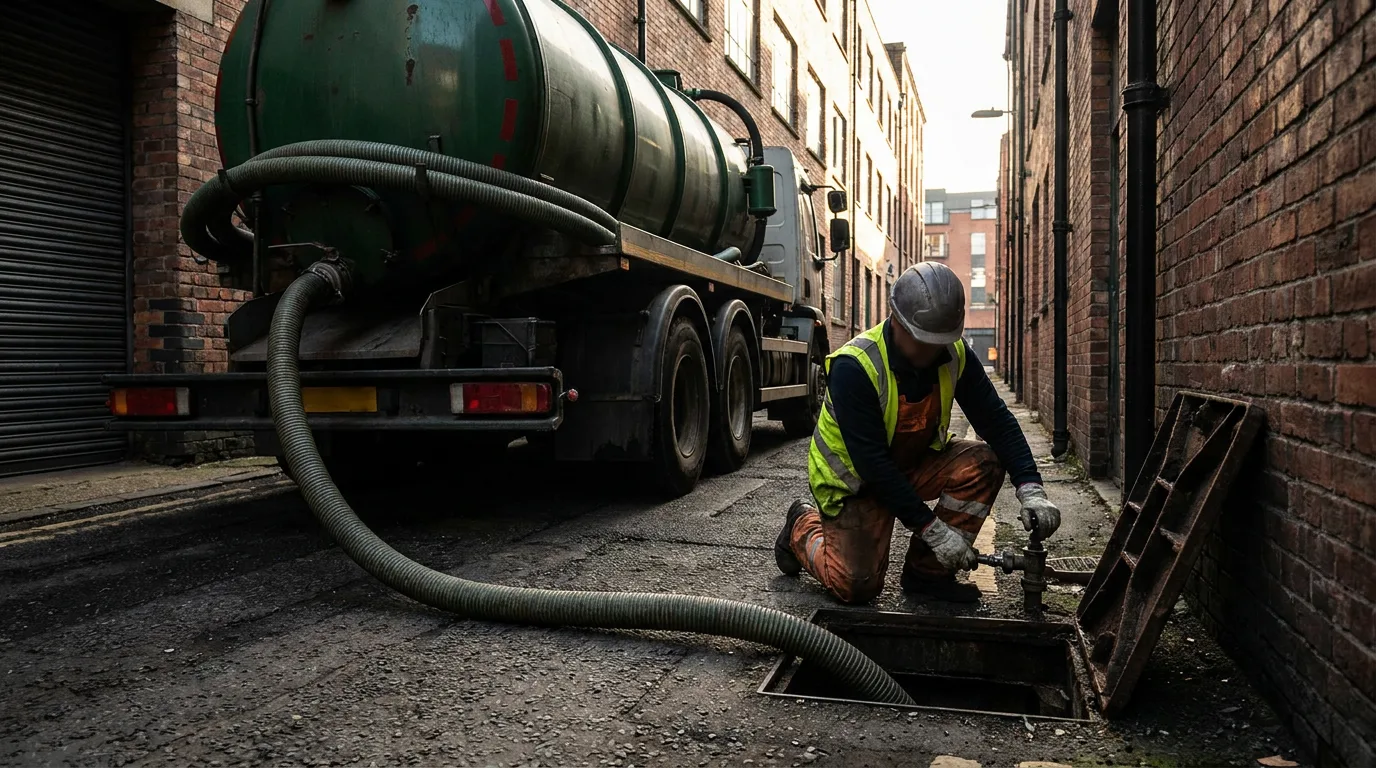
How Often Does a Septic Tank Need Cleaning?
Household size drives the schedule more than anything else. A couple in a home with a properly sized tank can often stretch toward the 5 year mark. A family of five in the same size tank fills it faster, and 3 years becomes the realistic ceiling. If you have never had septic tank cleaning done and do not know your tank's history, treat 3 years as the safe starting point rather than gambling on 5.
Garbage disposals, laundry habits and whether the property drains gray water separately all shift the number too. Homes near Kissimmee with older tanks, especially those installed before more current sizing standards, tend to need attention sooner. If your property sits closer to Campbell, about 4.9 miles southwest, or out toward Hunters Creek, roughly 5.2 miles north, soil and water table conditions can vary from what you'd see closer to the city center, and that can affect drain field performance between pumpings. When in doubt, check for the warning signs before guessing at a date; see septic tank warning signs for what to watch.
What Does Septic Tank Pumping Cost in Kissimmee?
Pumping cost tracks with tank size, access difficulty and how much solid buildup has accumulated. Straightforward jobs with clear truck access run less than tanks buried under decking or landscaping.
| service | duration | typical range |
|---|---|---|
| septic pumping | day rate | $150 to $300 |
| septic service | weekend | $50 to $150 |
Full pricing detail, including what changes the number, is on septic tank pumping cost. If your home runs a grease interceptor instead of, or alongside, a standard tank, that unit follows a different rule entirely: it gets pumped once fats, oils, grease and solids reach 25 percent of the liquid depth, not on a calendar. See grease trap pumping for that schedule.
Why Does Pumping Frequency Matter So Much?
Solids that never get pumped out eventually work into the drain field, and once that happens the fix is not a simple pump-out anymore, it's field repair or replacement. That is the expensive outcome this schedule exists to prevent. Kissimmee homeowners dealing with slow drains, gurgling pipes or standing water near the tank should not wait for the next scheduled date. Call for emergency septic service instead.
Commercial and agricultural operations face a related but separate standard. OSHA 1928.110 sets field sanitation requirements for agriculture, calling for potable water, toilets and handwashing within a quarter mile walk of hand-labor employees, at one facility per 20 workers. That is a labor rule, not a septic pumping rule, but properties running both a septic system and field crews should plan for both. See farm and agricultural restrooms for that side of the operation.

When Should You Rent a Holding Tank Instead of Waiting?
If your septic system is already failing, or a construction project has cut off access to the house connection, a holding tank bridges the gap without forcing an emergency system replacement on a deadline. It buys time to schedule pumping properly instead of rushing a repair. Details are on holding tank rental.
Construction sites and renovation projects around Kissimmee often need interim sanitation regardless of septic status. OSHA 1926.51(c) sets toilet facility ratios for construction sites: one facility for 20 workers or fewer, scaling up from there. A home renovation that disrupts the septic line for a few days is exactly the situation covered by home renovation porta potty rentals, and larger jobs should check construction site services for the full list of what a site typically needs, including temporary fence rental and light tower rental where lighting is required under OSHA 1926.56(a).
For properties further out, say near Buenaventura Lakes at 7.3 miles northeast or Southchase at 9.8 miles north, scheduling both septic service and any temporary sanitation together on one visit saves a trip charge. Kissimmee Porta Pros can coordinate a pump-out alongside a portable toilet rental drop for job sites that need both.
How do I know if my septic tank needs pumping now?
Slow drains, gurgling toilets, soggy patches near the tank or sewage odor indoors are the classic signs. Don't wait for the next scheduled date if you see these. Check septic tank warning signs for the full list, and call emergency septic service if water is backing up into the house.
Does household size really change the pumping schedule that much?
Yes. A 1,000 gallon tank serving two people lasts much longer between pumpings than the same tank serving a family of five. Water use and solids load both scale with occupancy, which is why the standard range spans 3 to 5 years rather than a fixed number.
What happens if I skip pumping for too long?
Solids overflow into the drain field, and that damage is far costlier to fix than routine pumping. Field repair or replacement runs well beyond a normal service call. Regular pumping on schedule, even before you notice problems, is the cheaper path every time.
Can construction on my property affect septic access?
Yes, especially renovations that dig near the tank or drain field. Coordinate timing with your contractor and consider holding tank rental if the system will be inaccessible for more than a day or two during the work.
Is a grease interceptor pumped on the same schedule as a septic tank?
No. Grease interceptors get pumped based on fill level, specifically once fats, oils, grease and solids hit 25 percent of the liquid depth, not on a fixed calendar interval like a residential tank. See grease trap pumping for that process.
Next step
Get a delivery date
Tell us the address, the dates and the headcount. We size the order and confirm the route.