
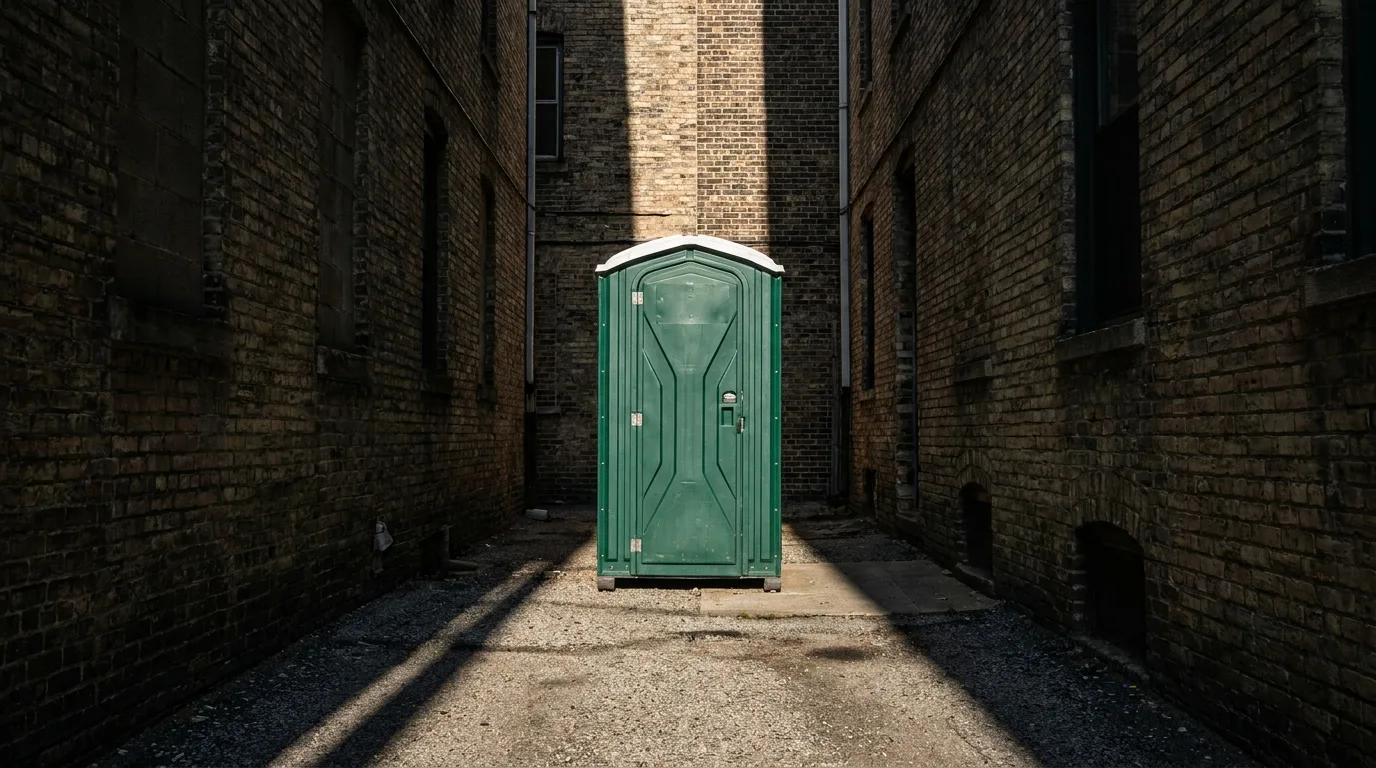
How Do Porta Potties Work On A Job Site?
A standard unit is a self-contained box, about 44 by 48 inches on the ground and 92 inches tall, sitting over a holding tank. There's no flush, no hookup. Waste drops straight into the tank, and the chemical package inside does the work of controlling odor and breaking down solids until the next pump-out. For a construction worker walking to a porta potty between tasks, that simplicity is the point: no lines to freeze, no pump to fail, nothing to clog. OSHA 1926.51(c) sets the ratio that governs how many units a Kissimmee jobsite needs, generally one toilet for every 20 workers on a standard crew size. That's why a construction site services plan usually starts with a headcount, not a guess. If you're not sure how many units that math gets you, the how many porta potties do I need guide walks through it, and the OSHA portable toilet requirements page covers the ratio in full. Crews doing painting, coating, or pesticide work trigger a separate rule, OSHA 1926.51(f)(1), which requires washing facilities for those specific contaminants, not general handwashing. That's a different obligation than the toilet count itself, and it's worth checking against a handwashing station requirements rundown before assuming a porta potty alone covers it.
How Do Flushable Porta Potties Work?
A deluxe flushable unit uses a small onboard freshwater tank and a foot pump or pressurized flush to rinse the bowl into the holding tank below, so it feels closer to a real bathroom without a sewer line. It still relies on the same sealed tank system as a standard unit, just with a rinse cycle added. These run a rental range of $85 to $1,200 a day depending on features, or $150 to $290 for a full week, and they're common at weddings and upscale events around Kissimmee rather than on framing crews. Check the deluxe flushable porta potty page for what's included. For anyone comparing that jump in comfort against a standard porta potty rental, the difference is mechanical, not just cosmetic: a flush unit has moving parts, a standard unit doesn't. Camping trips ask a similar question in a smaller way. How do camping porta potties work? Mostly the same tank-and-chemical setup, just scaled down and often self-hauled rather than serviced on-site, which matters if you're heading somewhere without road access for a pump truck.
How Does A Portable Sink Work?
A portable sink runs off a built-in freshwater reservoir, gravity-fed or pump-fed to the faucet, with a separate holding tank underneath to catch the gray water. There's no plumbing tie-in required, which is why they pair so easily with a fencing job, a food booth, or any event restroom rental setup where a sink alone needs to go somewhere the toilets aren't. Under 29 CFR 1910.141(d)(2), washing facilities need soap and a towel or drying device on hand. Hand sanitizer doesn't satisfy that. A portable sink rental covers that requirement directly, while a hand sanitizer station rental is a supplement, not a substitute. For ADA-compliant setups, the sink and an accessible unit both need clearance: ADA Standards 304.3.1 calls for a 60 inch turning circle, and 403.5.1 sets a 36 inch minimum clear route width, so placement around a sink station in Kissimmee needs the same walking space as the toilets do. See the ADA accessible porta potty page and ADA restroom requirements for the full spec list.

What Chemicals Keep A Porta Potty From Smelling?
The deodorizing chemical in the holding tank is what breaks down waste and masks odor between services, and it's a different product entirely from what a septic truck uses. If you're searching "portable toilet chemicals near me," that's the blue tank treatment added at each service stop, refreshed on the standard schedule industry guidance under ANSI/PSAI Z4.3 sets at one visit per week for up to 10 users over a 40 hour stretch. A septic tank cleaning chemical, by contrast, is used in a fixed home system, not a portable unit, and pumping frequency there runs 3 to 5 years depending on tank size and household, per the how often to pump a septic tank guide. Kissimmee Porta Pros keeps those two service lines separate: portable units get chemical dosing and tank swaps, while septic pumping service and septic tank cleaning handle fixed systems. If odor complaints do show up on a rented unit, the do porta potties smell page and how often are porta potties cleaned page cover what a normal cycle looks like versus a service gap.
| unit | day | week | month |
|---|---|---|---|
| standard | $100-$350 | $130-$500 | $125-$325 |
| deluxe | $85-$1,200 | $150-$290 | - |
| ada | $200-$400 | $240 flat | - |
Delivery for any of these typically adds $100 to $150 for a single day or $50 to $150 for a week, based on distance and site access. Crews near Hunters Creek, 5.2 miles north, or Campbell, 4.9 miles southwest, usually land in the lower end of that delivery band. For full pricing context, see porta potty rental cost and porta potty rental per day.
Do porta potties need to be hooked up to water or sewer?
No. Standard units run entirely on a self-contained tank and chemical system, no hookup required. That's what makes them workable on raw job sites and open fields around Kissimmee where utilities haven't been run yet.
How often does a porta potty get serviced?
Weekly is standard for a single unit under normal use, per ANSI/PSAI Z4.3. High-traffic events or full crews may need two or more visits a week. Check the how often are porta potties cleaned page for specifics.
Can a porta potty freeze or overflow in bad weather?
Freezing is a real risk in cold climates, though less of a concern in Kissimmee. Overflow happens when service intervals stretch too long for the crew size. Right-sizing unit count against OSHA 1926.51(c) prevents most of it.
What's the difference between a standard and a flushable unit?
A standard unit has no flush and relies fully on the holding tank and chemical. A flushable unit adds a small freshwater tank and a pump-actuated rinse, priced accordingly on the deluxe flushable porta potty page.
Are portable sinks required alongside porta potties?
Not automatically, but 29 CFR 1910.141(d)(2) requires soap and towels or a drying device wherever handwashing facilities exist. A portable sink rental is the direct way to meet that on a site without plumbing.
Next step
Get a delivery date
Tell us the address, the dates and the headcount. We size the order and confirm the route.